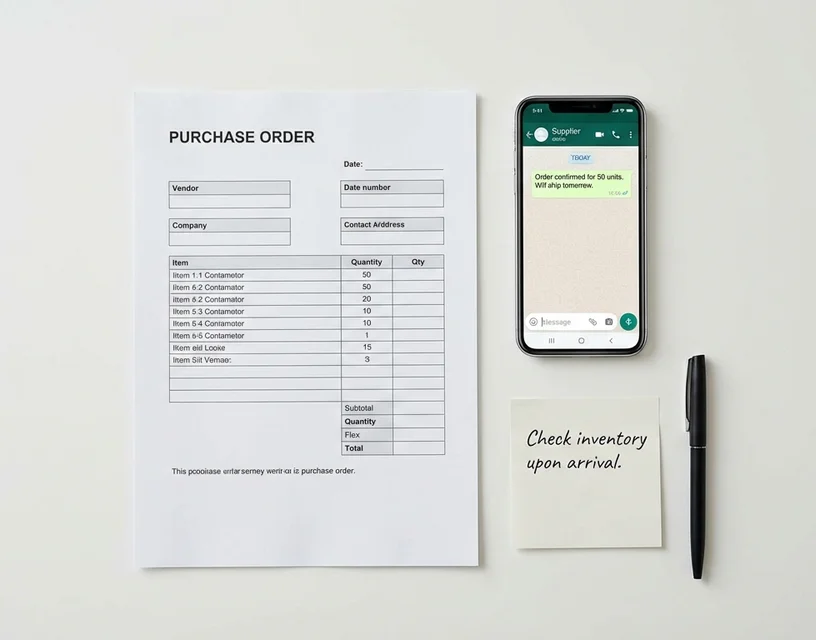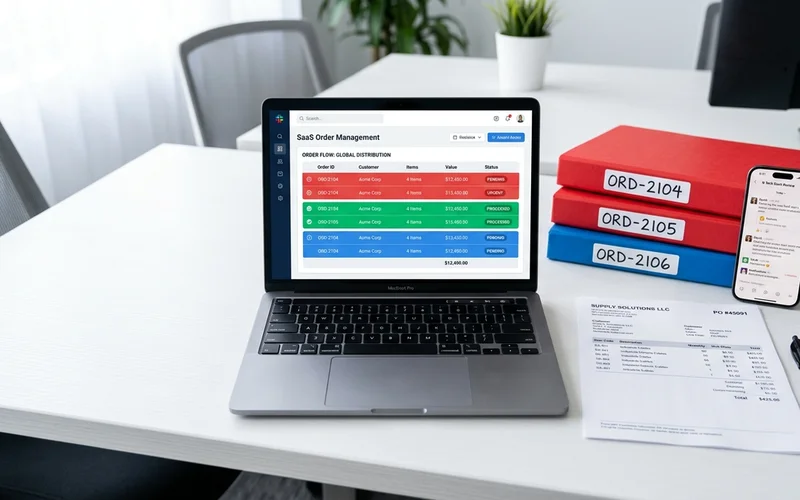
Rossum is a well-built AI document processing platform. Finance teams, legal departments, and shared service centers use it to extract data from invoices, purchase orders, and contracts across industries. That is a real use case, and Rossum handles it reliably.
The issue is specificity. If you're a distributor and your primary problem is order intake — 60 emails a day from customers who each write differently, half of them referencing product descriptions your catalog doesn't recognize — Rossum was not built for that particular challenge. It was built to process any document from any business process. That breadth is a genuine strength. For your problem, it is also a constraint.
You may have encountered Rossum while researching sales order automation — it ranks for that term and appears in most document AI comparisons. This article addresses the gap those comparisons don't: whether a horizontal IDP platform is the right fit for a distribution order desk, and what the purpose-built alternatives look like.
Why distribution businesses look beyond Rossum for order processing
What Rossum does well — and where it stops
Rossum's core capability is data extraction from structured and semi-structured documents. Give it an invoice, a purchase order, a contract — documents that follow recognizable formats — and its machine learning model pulls the right fields with solid accuracy. The system adapts to new document layouts over time, which reduces the need for manual template creation compared to older OCR tools.
Where it fits best: organizations running document processing across multiple departments. AP teams, AR teams, procurement — all feeding different document types into one platform. The breadth makes sense when document automation is a company-wide initiative, not a solution to one desk's problem.
Where it runs short: the specific interpretation challenge distribution order desks face daily. When a customer emails "can you send 20 of the 40mm blue ones and check if you have the bracket we ordered in March," there are no structured fields to extract. The customer is communicating intent through informal language, product descriptions that don't match any catalog code, and references to prior orders. Extracting fields from that message applies the wrong frame entirely. Understanding what they mean is the right one.
Rossum can be configured to handle distribution order formats — but configuration is the operative word. Getting it to perform reliably on an order desk requires professional services, custom model training, and ongoing tuning as your customers' order patterns evolve. Starting price: $18,000+ per year before any of that work begins.
The configuration gap: horizontal IDP vs. distribution specialist
Every horizontal platform carries a configuration cost. The platform can theoretically do many things; your specific use case sits somewhere in the middle of that capability space and requires work to reach.
For distribution order intake, the configuration cost on a horizontal IDP platform is significant. You need to configure the extraction schema for your SKU catalog. You need to handle the variability in how customers refer to your products — informal names, abbreviations, descriptions instead of codes. You need to manage updates as product lines change and as customers evolve how they order. You need to handle formats that go beyond what document extraction was designed for: free-text emails, "same as last time" messages, photos of handwritten warehouse lists.
A distribution specialist starts from the other direction. The SKU catalog matching, the confidence scoring on line items, the human review queue for uncertain interpretations — these are not features you configure on top of a horizontal platform. They are the core of what the product does.
That is not a judgment on Rossum. It is a product fit distinction. When your primary problem is horizontal document automation across departments, a horizontal platform is the right answer. When your primary problem is order intake from unstructured distribution customer communications, a specialist solves what a configurable platform requires you to build around.
The 5 best Rossum alternatives for distribution order automation
1. OrderFlow — purpose-built for distribution format variability
OrderFlow was built for the specific problem that sends distributors searching for Rossum alternatives: orders that arrive in formats no extraction schema can anticipate.
The system monitors your order inbox continuously and processes every incoming message using AI language understanding. Free-text emails, PDF purchase orders, scanned handwritten notes, photos of lists, spreadsheets with non-standard customer codes — the AI interprets what the customer means rather than extracting fields from document positions. No templates. No per-customer configuration. No professional services engagement before the system is useful.
Each interpreted line item gets a confidence score. High-confidence matches move to your ERP automatically. Anything below the threshold routes to a review queue where your team sees the AI's interpretation next to the original order. Nothing uncertain enters your ERP without a human decision — the AI removes interpretation work; it does not remove human judgment from the loop.
Production proof: At Meesenburg Romania, a building materials distributor with a genuinely variable order mix, OrderFlow achieved a 98% no-modification rate across all incoming order formats. 50% of orders run fully automated end-to-end with zero human involvement. These are live production numbers from a real deployment, not a controlled demo on clean inputs.
ERP integration: Pre-built connectors for SAP, Microsoft Dynamics, and Sage. API-based integration for other systems. OrderFlow functions as an intake layer in front of your existing ERP — nothing downstream changes.
Deployment: Weeks. No model training project required before go-live. The proof of concept runs on your actual orders from day one.
GDPR: European company. EU data residency. GDPR-compliant by design — no data sovereignty risk for European distributors.
Best for: Mid-market distributors (50 to 500+ employees) where a meaningful share of orders arrive as free-text emails, scanned documents, or informal customer requests.
2. Conexiom — template-based, strong on structured formats
Conexiom is built for structured, high-volume order processing. EDI transactions, consistent PDF purchase orders from stable trading partners, and document formats that do not change often are where it performs well. The product is well-established in the distribution sector and delivers high automation rates on those formats.
The constraint: Template architecture. Every customer format needs a separate mapping, and templates require IT involvement to create and maintain. When a customer changes their ordering process — which happens regularly — the template breaks and manual processing resumes until someone rebuilds it. For distributors evaluating Rossum specifically because of format variability, Conexiom trades one limitation for another.
Pricing: $30,000 to $60,000+ per year for mid-market, plus implementation and ongoing template maintenance costs.
Best for: Distributors where 80%+ of order volume is structured EDI or consistent PDF POs, with IT resources available for ongoing template maintenance.
For a detailed format flexibility comparison, the Conexiom alternatives guide covers the full picture including a head-to-head format breakdown.
3. Esker — AP automation suite with order processing module
Esker is a full enterprise document automation platform covering accounts payable, accounts receivable, procurement, and order management. Its order module handles incoming customer purchase orders within a broader document automation suite.
Where Esker works: Companies that already use Esker for AP automation and want to extend to order management without a separate vendor relationship. Also a strong fit for enterprise businesses (500+ employees) needing end-to-end document automation across departments.
The constraint: Order processing is a secondary module on a platform built for AP automation first. The architecture reflects that origin — it handles structured POs well but was not designed for the format variability that drives most distribution order desk pain. Like Rossum, it is a broad platform optimized for a different primary use case.
Pricing: $50,000+ per year for mid-market. Enterprise contracts higher.
Best for: Large distributors already invested in the Esker ecosystem, or companies needing AP/AR/order document automation from a single vendor.
For the full AP automation vs. order processing distinction, the Esker alternatives guide walks through it directly.
4. Canals AI — emerging AI-native tool for order intake
Canals is an AI order processing platform that interprets order meaning rather than matching templates — a similar architectural approach to OrderFlow. North American customers report solid performance on unstructured email orders and faster deployment timelines than template-based alternatives.
Where Canals works: AI-native architecture handles format variability well. The approach to free-text email interpretation is conceptually aligned with what distribution order desks need. Deployment is faster than traditional template-based tools.
Key limitation: EU presence is limited and public GDPR compliance documentation is not established. For European distributors processing customer order data, this is not a minor gap — it is a legal requirement. Data residency questions matter when customer orders contain commercially sensitive information.
Best for: North American distributors evaluating AI-native order processing, where EU data residency is not a requirement.
5. Endeavor AI — broad platform for manufacturing and distribution
Endeavor AI is a workflow automation platform covering manufacturing and distribution operations, with order processing as one of its capabilities.
Where Endeavor works: Organizations wanting to automate multiple operational workflows beyond order intake within a single platform. The broad scope suits businesses where order processing is one of several automation targets, particularly in U.S. manufacturing and distribution environments.
The constraint: Breadth over depth. Endeavor is not a distribution order intake specialist — it covers a wide operational surface. U.S.-centric deployment focus. For distributors evaluating Rossum specifically because they need a purpose-built distribution order tool, Endeavor replaces one horizontal platform with another.
Best for: U.S. manufacturing and distribution businesses wanting broad operational workflow automation, where order processing is one of multiple use cases to address simultaneously.
How to choose: document AI platform vs. specialist order automation
The diagnostic for any distributor evaluating Rossum alternatives comes down to one question: is your problem document automation in general, or distribution order intake specifically?
If your business processes invoices, purchase orders, contracts, and receipts across multiple departments — and order intake is one workflow among many — a horizontal platform like Rossum offers genuine breadth. The configuration cost to make it work for distribution orders is offset by coverage of other document types.
If your primary problem is the order desk — CSRs spending their morning processing emails from customers who each write differently, with error rates climbing on orders that don't arrive cleanly — a specialist tool solves that problem at the source. No configuration project. No professional services engagement. No model training before the proof of concept can run.
Three questions that clarify the choice:
What share of your orders arrive in unstructured formats? Count the free-text emails, the "same as last time" messages, the informal orders with no product codes. If that number exceeds 30% of daily volume, the configuration and maintenance overhead on a horizontal platform accumulates faster than the annual cost of a specialist.
Is order intake your primary automation problem or one of several? Horizontal platforms make sense when document automation is a company-wide initiative. If you are solving one desk's problem, you are paying for platform capability you will use a fraction of.
What is your implementation timeline? Rossum implementations for distribution-specific use cases typically involve a professional services engagement before the system is useful on your orders. Specialist tools aim for weeks. If your order desk needs relief now, the configuration timeline is a real cost.
For a full framework on evaluating order processing software for distributors, that guide covers the complete evaluation criteria and decision matrix.
Real distribution proof: Meesenburg Romania
Numbers from a vendor's materials prove very little. Results from a named customer processing real production orders prove something.
At Meesenburg Romania, a building materials distributor with a high-variability order environment, OrderFlow's production deployment achieved:
- 98% of orders required no modification after AI processing
- 50% of orders fully automated with zero human involvement
- Input mix: structured POs, free-text emails, informal requests, scanned documents, and mixed formats
The 98% figure covers the full incoming spectrum — not just the structured orders that any tool handles. It includes emails referencing product descriptions no catalog recognizes, informal messages from customers who have been ordering by phone for years, and scanned notes from warehouse buyers who do not use standard formats.
That is what purpose-built for distribution means in practice. Rossum can be configured to process distribution orders. OrderFlow does not require configuration to do what Meesenburg's order desk needed — because distribution format variability is the product's design assumption, not an edge case requiring professional services to reach.
See How OrderFlow Handles Your Order Formats
Frequently Asked Questions
What is Rossum used for in distribution businesses?
Rossum is a horizontal AI document processing platform used for high-volume document capture across business processes — invoices, purchase orders, contracts, and receipts. In distribution, some businesses use it as an intake layer for incoming customer orders. The platform works well on structured document formats with predictable fields. For distributors whose order intake pain comes from format variability — free-text emails, informal requests, handwritten notes — Rossum can be configured to handle these cases, but configuration requires professional services and ongoing model tuning. It was not designed specifically for distribution order intake.
Why do distribution businesses look for Rossum alternatives for order processing?
Two patterns come up consistently. First, Rossum is a horizontal IDP platform optimized for broad document automation across departments. Getting it to perform on distribution-specific order intake requires configuration and professional services that a purpose-built specialist does not. Second, the starting price of $18,000+ per year covers platform access, not a working order processing deployment. For distributors who need to solve one specific problem — getting unstructured customer orders into the ERP without manual re-entry — a specialist tool delivers that outcome without a configuration project.
How does OrderFlow compare to Rossum for handling unstructured order formats?
Rossum uses field extraction trained on document structure. For unstructured free-text emails — "need the usual plus 20 of the 40mm blue ones" — it requires schema configuration to identify which parts of the text correspond to which ERP fields. OrderFlow interprets meaning rather than extracting fields, so it processes free-text emails, informal requests, and handwritten scans without per-format configuration. At Meesenburg Romania, this produced a 98% no-modification rate across a production order mix that included unstructured inputs, not just clean POs.
How much does Rossum cost compared to specialist order automation tools?
Rossum's starting price is $18,000+ per year for the base platform — before professional services for distribution-specific configuration, model training, and ERP integration. The three-year total cost of ownership comparison often favors specialist tools, particularly when professional services and ongoing maintenance overhead are included. Specialist tools require no custom model training project, no per-format configuration, and no ongoing tuning as your customer base evolves.
Can a Rossum alternative integrate with my existing ERP system?
Yes. Tools like OrderFlow function as an intake layer in front of your ERP, not as a replacement for it. Pre-built connectors are available for SAP, Microsoft Dynamics, and Sage, with API-based integration for other systems. The AI processes incoming orders, matches line items to your SKU catalog, and pushes confirmed orders to your ERP. Everything downstream — inventory, invoicing, fulfillment — continues exactly as before. The order processing tool closes the interpretation gap between how customers communicate orders and the structured data your ERP needs.
Compare OrderFlow to Your Current Tool — Book a Demo