If you've been evaluating Tradogram for your distribution order processing needs and discovered it doesn't quite solve your problem, you're not alone. Tradogram is genuinely good at what it does. The issue is that what it does is manage procurement — the purchase orders you send to suppliers — not the orders customers send to you.
That's the distinction this article is built around. If you need to automate inbound customer order processing for a distribution business, here are five tools that actually address that problem, along with an honest explanation of why Tradogram isn't one of them.
What Tradogram does — and what it doesn't
Tradogram's purpose: buy-side procurement management
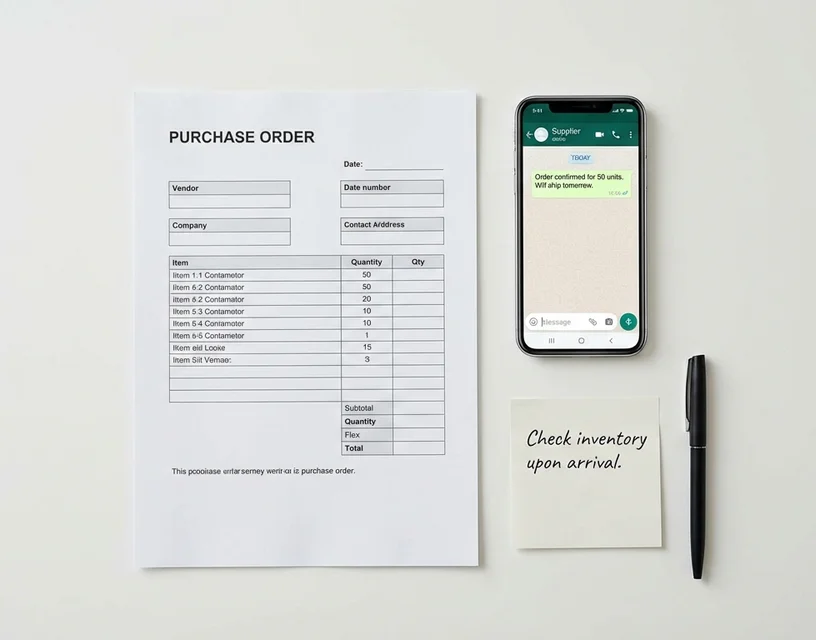
Tradogram is a procurement management platform. Its core use case is managing the buy side of your supply chain: creating and routing purchase requisitions, getting approvals, generating POs to suppliers, tracking delivery against those POs, and providing procurement analytics.
It's a solid tool for that problem. Distributors with procurement teams managing supplier relationships and outbound purchasing workflows have legitimate reasons to use it.
Why sell-side order intake automation is a different category
The sell-side order intake problem is structurally different from procurement management. Your customers send you orders: by email, in PDF attachments, through informal text, via EDI if they're large enough, and occasionally via WhatsApp or portal. Each order needs to be read, interpreted, matched to your product catalog, and entered into the ERP as a confirmed sales order.
Tradogram wasn't built for this problem. It has no inbox monitoring, no AI interpretation of unstructured emails, no product catalog matching for your catalog, and no push to your ERP's sales order module. These are the core capabilities required for sell-side order intake automation.
The buyers who end up evaluating Tradogram for distribution order processing typically found it through a search like "order processing automation" or "order management software." Tradogram appears in those results because it handles order management — for procurement. The overlap in language masks a fundamental difference in the underlying problem.
See Sell-Side Order Automation in Action
The 5 best alternatives to Tradogram for distribution order processing
1. OrderFlow — purpose-built AI sell-side order intake
OrderFlow is an AI-native order processing automation platform built specifically for distribution businesses receiving customer orders by email, PDF, and other unstructured formats.
What it does: Monitors your email inbox continuously, reads incoming orders in any format, matches products to your catalog using AI interpretation, flags uncertain items for human review with confidence scores visible, and pushes confirmed sales orders to your ERP via API.
Who it's for: Distribution businesses with significant email-based order volume. Customers who use informal descriptions, variable formats, or informal language are handled by the AI interpretation layer — not by pre-configured templates that break when formats change.
Proof: Meesenburg Romania, a multi-category industrial distributor, achieved 98% no-modification accuracy and 50% full automation on live production orders after implementing OrderFlow.
ERP integration: SAP, Microsoft Dynamics 365, Sage, and NetSuite via pre-built API connectors. Deployment typically takes four to eight weeks.
Best for: Mid-market distributors with 50 to 500-plus orders per day and a mixed-format inbox including unstructured email.
2. Conexiom — high-volume structured order processing
Conexiom is a document automation platform that converts structured customer purchase order documents (typically EDI, PDF, and fax) into ERP transactions at high accuracy.
What it does: Extracts data from structured PO documents using document automation, maps extracted fields to ERP fields via configured templates, and pushes confirmed orders to the ERP.
Who it's for: High-volume distributors whose customers send structured, consistent PO formats. Conexiom's accuracy is strong on structured input and drops on informal, variable email formats that don't match a configured template.
Limitation: Template-based architecture requires per-customer configuration. Informal email orders that don't arrive as structured documents require separate handling. A distribution inbox with significant free-text email volume isn't fully served by Conexiom's structured approach.
Best for: Large distributors with predominantly structured EDI and PDF order input.
3. Esker — enterprise AP and order automation suite
Esker is an enterprise-grade document automation platform with modules for accounts payable, accounts receivable, order management, and procurement. Its order management module handles incoming orders as part of a broader finance and document automation suite.
What it does: Processes incoming order documents, manages approval workflows, provides order status visibility, and connects to enterprise ERP systems (primarily SAP).
Who it's for: Enterprise distributors that are standardizing on a single document automation platform across AP, AR, and order management. Esker's strength is breadth across finance processes, not depth in distribution-specific catalog matching.
Limitation: Implementation timelines run three to six months. Pricing is structured for enterprise scale. Mid-market distributors often find the scope and cost exceed their intake automation need.
Best for: Enterprise distributors already using Esker for AP/AR who want to consolidate order management on the same platform.
4. Tradeshift — B2B commerce network (different scale and model)
Tradeshift is a B2B commerce platform that connects buyers and suppliers through a network, enabling structured digital transactions including purchase orders, invoices, and payment.
What it does: Creates a connected digital commerce network between trading partners. When both buyer and supplier are on the Tradeshift network, orders and invoices flow as structured digital transactions rather than emails and documents.
Who it's for: Enterprise buyers and their large supplier networks who want to digitize the entire buy-sell transaction relationship. Tradeshift works well when both sides of the transaction adopt the platform.
Limitation for distribution: Most of a distributor's customers won't be on the Tradeshift network. Customers who send informal emails or PDF attachments aren't covered by the network model. Adoption depends on getting customers to change how they send orders — which is a significant friction for mid-market B2B customer bases.
Best for: Enterprise organizations with the scale and leverage to drive supplier/customer network adoption.
5. Coupa — procurement and supplier collaboration (enterprise)
Coupa is an enterprise spend management platform covering procurement, invoicing, expense management, and supplier collaboration. Like Tradogram, it's primarily buy-side procurement — but at enterprise scale.
What it does: Manages the full procurement lifecycle for enterprise buyers: purchasing, approvals, supplier management, contract management, invoicing, and spend analytics. Coupa's eProcurement module is a comprehensive buy-side platform.
Who it's for: Enterprise-scale organizations with procurement teams managing complex supplier relationships and large-scale spending. It's not a sell-side tool for distributors receiving customer orders.
Limitation: Like Tradogram, Coupa addresses procurement management (buy-side) rather than customer order intake (sell-side). A distributor using Coupa still needs a separate sell-side intake solution for handling incoming customer orders.
Best for: Enterprise procurement teams managing supplier spending at scale.
How to choose: are you solving buy-side or sell-side?
The simplest way to clarify which category of tool you actually need:
You need a buy-side procurement tool (like Tradogram or Coupa) if your problem is managing the purchase orders your team creates and sends to your suppliers: requisition workflows, PO creation, supplier approval, procurement analytics.
You need a sell-side order intake tool (like OrderFlow or Conexiom) if your problem is handling the orders customers send to you: reading incoming emails and documents, matching products to your catalog, entering confirmed orders into your ERP without manual re-keying.
Most distribution businesses need both. Tradogram handles outbound procurement. OrderFlow handles inbound customer orders. These aren't competing solutions; they address opposite ends of the order flow.
The confusion typically arises because both categories use the word "order" and both connect to ERP systems. But the direction and content of the problem are different.
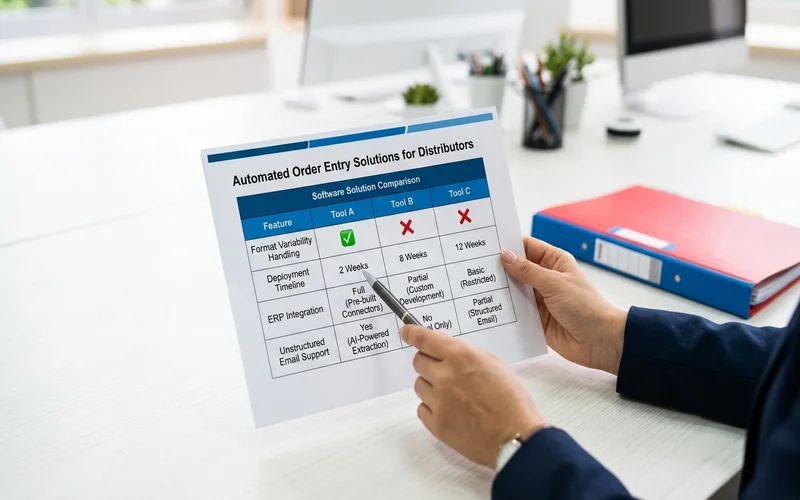
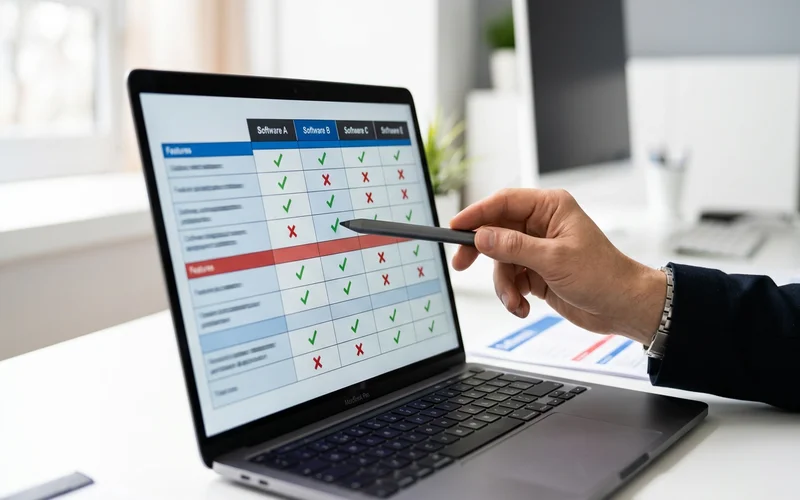
For a full comparison of order processing software for distributors, including evaluation criteria and a side-by-side framework, see the dedicated comparison guide.
Meesenburg Romania: sell-side order intake automation in production
To make the sell-side problem concrete: Meesenburg Romania distributes industrial components across multiple product categories. Their customers send orders by email, in varied formats, using their own product vocabulary and descriptions.
Before implementing AI email order processing, each incoming order required a CSR to read the email, interpret what the customer wanted, match products to the catalog, and enter line items into the ERP manually. At volume, that's a significant manual bottleneck.
After implementing OrderFlow for sell-side intake:
- 98% of orders needed no modification after AI processing. The AI's catalog matching was accurate enough on real production data that the team accepted output without correction on nearly every order.
- 50% of orders completed end-to-end with no human involvement from email receipt to ERP entry.
That's the sell-side problem solved in production. No procurement tool, including Tradogram, addresses this problem — because it's a different problem from what procurement tools are built for.
Book a Demo — See the Difference From Tradogram
Frequently Asked Questions
What are the best Tradogram alternatives for order processing?
It depends on whether you need buy-side or sell-side automation. For sell-side intake (automating customer orders that arrive in your inbox), the top options are OrderFlow (AI-native for unstructured email), Conexiom (structured document processing), and Esker (enterprise suite). For buy-side procurement at enterprise scale, Coupa and Tradeshift are comparable category options.
What is the difference between Tradogram and sell-side order automation?
Tradogram manages the purchase orders you send to suppliers (buy-side). Sell-side order automation handles the orders customers send to you: reading emails, matching products, entering data into the ERP. These are different problems requiring different tools.
Does Tradogram handle incoming email order processing?
No. Tradogram is built for outbound procurement management. It doesn't monitor inbound customer email, interpret unstructured orders, match products to your distribution catalog, or push data to your ERP as sales orders.
Can Tradogram integrate with distribution ERP systems for order intake?
Tradogram integrates with ERPs for procurement workflows but doesn't function as a sell-side intake layer. Inbound customer order processing requires a different tool category entirely.
What should distribution businesses use for sell-side order automation?
For inbound customer order intake in any format, evaluate OrderFlow (AI-native, handles unstructured email), Conexiom (structured document processing), or Esker (enterprise suite). The right choice depends on your order format mix, catalog complexity, and volume.